

Allergies have become one of the most widespread chronic diseases in Europe, with their prevalence continuously increasing across all age groups. While in the previous decade the European Academy of Allergy and Clinical Immunology (EAACI) warned that by 2025 every second European would suffer from some form of allergy [1], current data confirm that this threshold has indeed been reached in many European regions. The alarming situation is further highlighted by a press release from the EAACI Congress 2025, according to which every third child in Europe already suffers from an allergic condition [2].
This massive rise—from a relatively rare condition at the beginning of the 20th century—represents both a significant decline in individual quality of life and a major burden on national healthcare systems.
What will you learn in this article?
- A new perspective on why allergies are increasing
- Urban smog: Why is pollen more dangerous in cities?
- The role of the microbiome and the gut–nose axis
- Probiotic intervention
- How to better prepare for pollen season
- Key takeaways
A new perspective on why allergies are increasing
The increase in allergy prevalence cannot be explained by genetic factors alone but rather reflects a combination of modern influences, with changes in the environment playing a key role. Studies from 2024 and 2025 provide deeper insight into how climate change and urbanization increase the aggressiveness of pollen allergens.
Due to global warming, the pollen season starts earlier—already in mid-January in lowland areas (hazel and alder) and lasts longer. For the body, this means significantly less time for recovery after winter, while mucous membranes are exposed to irritants for several additional weeks.
Higher concentrations of carbon dioxide in the air also stimulate faster plant growth and more intense pollen production. [3] In invasive species such as ragweed (Ambrosia artemisiifolia), plants grown under higher temperatures and CO₂ levels have been shown to produce pollen with higher concentrations of the main allergen. A similar trend has been observed in birch. [4] [5]
Urban smog: Why is pollen more dangerous in cities?
You might be surprised to learn that pollen behaves very differently in clean natural environments compared to city centers. Harmful substances in urban air (especially ozone and exhaust fumes) directly interact with pollen and transform it into an “aggressive aerosol.”
Under normal conditions, pollen grains are relatively large and are typically trapped in the upper respiratory tract (the nose). However, when pollen interacts with smog and humidity, the pollen grain structure is disrupted, releasing thousands of microscopic allergen-loaded particles into the air. These tiny particles can penetrate deeper into the bronchi and lungs, where they cause much stronger irritation. [6]
The role of the microbiome and the gut–nose axis
One of the most significant scientific breakthroughs of the past two years (2024–2025) is the confirmation of the role of the gut microbiome in the systemic modulation of allergic responses. This is closely linked to the state of the gut microbiota through the so-called gut–nose axis.
The key to understanding this connection lies in the metabolic activity of gut bacteria. In patients suffering from chronic allergies, dysbiosis is often observed, characterized by a critical deficiency of butyrate-producing bacteria (e.g., the genus Faecalibacterium).
Butyrate, a short-chain fatty acid (SCFA), plays a key role as a signaling molecule in the differentiation of regulatory T cells (Treg), which act as “brakes” in the immune system by suppressing excessive immune responses. [7]
Probiotic intervention
Clinical studies from 2025 confirm that targeted supplementation with specific probiotic strains can restore this disrupted balance. A large meta-analysis of 26 randomized controlled trials [8], including more than 3,000 patients, confirmed that supplementation with specific probiotic strains can help restore this balance. In patients who took probiotics, the following effects were observed:
-
A significant reduction in nasal symptoms (congestion, itching).
-
An overall improvement in quality of life during the season.
From a clinical perspective, the most significant results were observed particularly in strains from the genera Lactobacillus (e.g., L. paracasei) and Bifidobacterium (e.g., B. longum), which demonstrably reduced inflammatory responses in the mucosa of the upper respiratory tract.
How to better prepare for pollen season
-
Support both gut health and mucosal barriers
Allergies begin where the integrity of our barriers ends. Studies suggest that probiotics can modulate the immune response and alleviate symptoms of allergic rhinitis by “calming” an overactive immune system in the gut. Supplementation with probiotics containing specific strains such as L. paracasei or B. longum should last at least 4 to 8 weeks to enable effective signaling toward regulatory T cells.
-
Early immunomodulation is also key for effectively managing pollen season.
Vitamin D is a key regulator of the immune system. Optimal blood levels are essential for the proper function of regulatory T cells (Treg), which, as mentioned, act as “brakes” on allergic responses.
Omega-3 fatty acids: They have strong anti-inflammatory effects. They help reduce the excessive production of inflammatory mediators that worsen mucosal swelling and shortness of breath.
Vitamin D and Omega-3 should be supplemented long-term to ensure the immune system is balanced before the pollen season fully begins.

- Other well-established supplements that may help manage allergic reactions include:
Quercetin: This powerful flavonoid acts as a natural antihistamine. It stabilizes mast cell membranes, thereby preventing the release of histamine at the very beginning of the allergic reaction.
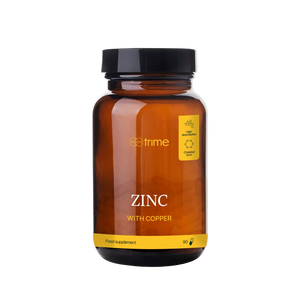
Vitamin C and Zinc: They support the integrity of mucosal barriers and accelerate the breakdown of excess histamine in the bloodstream. Vitamin C also acts as a cofactor in the synthesis of enzymes that help reduce oxidative stress caused by urban pollutants.
-
In addition to proven supplementation, it is also beneficial to incorporate appropriate lifestyle measures:
After returning from outdoors, it is advisable to wash your face with water. Clothing worn outside should not be stored in the bedroom. Ventilation should take place at night or early in the morning, or during the day after rain, when pollen activity in the air is lowest. Regular nasal rinsing with saline solutions (using a neti pot) helps remove settled pollen and reduce swelling.

Key takeaways
-
Allergies begin with microbiome imbalance: Gut health can be influenced through immunomodulation via the gut–nose axis. One of the key factors is sufficient butyrate and beneficial bacteria, which stimulate regulatory T cells (Treg) that act as an “immune brake.”
-
Pollen is more aggressive in cities: Smog and humidity disrupt pollen grains, causing them to rupture and release an aggressive aerosol that penetrates deeper into the lungs, triggering a stronger inflammatory response in the bronchi.
-
Start supplementation early: Immunomodulation is not a one-day solution. Vitamin D3 and Omega-3 should be supplemented long-term to stabilize inflammatory responses.
-
Use targeted supplementation: Quercetin combined with vitamin C helps stabilize mast cells and supports more efficient histamine breakdown. Vitamin C and zinc support mucosal barrier function and the degradation of circulating histamine.
-
Targeted probiotics: Look for strains such as L. paracasei or B. longum. To achieve a therapeutic effect, supplementation should begin at least 4–8 weeks before peak allergen exposure.
-
Lifestyle measures: Do not overlook basic hygiene—nasal rinsing with a neti pot and washing your face after returning home significantly reduce the allergen load your body has to deal with.
Sources:
[1] EAACI Advocacy Manifesto: Tackling the Allergy Crisis in Europe, https://eaaci.org/wp-content/uploads/2024/02/EAACI_Advocacy_Manifesto.pdf
[2] https://eaaci.org/policies/eaaci-congress-2025-press-release/
[3] Besancenot, Jean-Pierre & Mascarell, Laurent. (2026). Climate-driven changes in pollen dynamics: increased loads and earlier, longer exposure. Exploration of Asthma & Allergy. 4. 10.37349/eaa.2026.1009107.
[4] Augustin J, Gilge S, Appel H, Dauert U, Endler C, Heesen R, Höflich C, Kuttler W, Schlünzen KH, Straff W, Werchan B, Werchan M, Zuberbier T, Traidl-Hoffmann C. Climate Change, Air Quality, and Pollen Allergies—State of the Art and Recommendations for Research and Public Health. Allergy. 2026 Mar;81(3):663-683. doi: 10.1111/all.70159. Epub 2025 Dec 20. PMID: 41420513; PMCID: PMC12954572.
[5] The impact of climate change on selected pollen allergies and some allergic diseases, https://www.researchgate.net/publication/397955830_The_impact_of_climate_change_on_selected_pollen_allergies_and_some_allergic_diseases
[6] Sedghy F, Varasteh AR, Sankian M, Moghadam M. Interaction Between Air Pollutants and Pollen Grains: The Role on the Rising Trend in Allergy. Rep Biochem Mol Biol. 2018 Apr;6(2):219-224. PMID: 29766006; PMCID: PMC5941124.
[7] Yang W, Wu H, Li X, Wan Z, Kong W, Huang C. Gut-lung axis in allergic rhinitis: microbial dysbiosis and therapeutic strategies. Front Microbiol. 2025 Dec 12;16:1654997. doi: 10.3389/fmicb.2025.1654997. PMID: 41459210; PMCID: PMC12742311.
[8] Probiotics for the Treatment of Pediatric Allergic Rhinitis: A Systematic Review and Network Meta-Analysis. medRxiv 2025.


