
How to Boost Testosterone Naturally: Evidence-Based Tips for Men
Articles

Testosterone is the most important male sex hormone, influencing muscle mass, energy, libido, fertility and mental well-being. After the age of 30, its level naturally starts to decline by roughly 1–2% per year, and this decline can be accelerated by excess weight, lack of sleep, chronic stress or an unhealthy lifestyle. How can you boost testosterone naturally, and what actually works according to scientific studies?
What you will learn in this article:
- What is testosterone and what does it do?
- Where is testosterone produced?
- What is testosterone made from?
- What lowers testosterone levels?
- Hormonal balance and endocrine disruptors
- Symptoms of low testosterone
- What is a normal testosterone level in men?
- How can testosterone be measured?
- Why do men need to support their testosterone?
- How to boost testosterone naturally within a few weeks
- Herbs that support optimal testosterone levels
- Key takeaways
What Is Testosterone and What Does It Do?
Testosterone is the main male sex hormone from the group of androgens, and it affects much more than just libido or muscle growth. It is involved in building muscle, maintaining bone density, producing red blood cells, fertility, sexual function and mental well-being. It is also important for healthy energy metabolism, recovery, body fat distribution, motivation and vitality. [1]
Although testosterone is known as a male hormone, it is also produced in women, only in much smaller amounts. Men produce roughly 10 to 20 times more of it each day.
Testosterone levels peak in young adulthood and gradually start to decline from around the age of 30, by an average of 1–2% per year. [2] Ageing is not the only cause, though. Lifestyle, body weight, sleep quality, stress levels and physical activity also play a major role.
Where Is Testosterone Produced?
In men, roughly 95% of testosterone is produced in the Leydig cells of the testes. Smaller amounts are made in the adrenal cortex. In women, testosterone is produced mainly in the ovaries and adrenal glands, where it serves as a precursor to other sex hormones.
Its production is controlled by the hypothalamic-pituitary-gonadal axis (HPG axis). The hypothalamus releases the hormone GnRH, which stimulates the pituitary gland to produce luteinising hormone (LH). LH then activates the Leydig cells to produce testosterone. Any disruption of this hormonal regulation can reduce testosterone production.
What Is Testosterone Made From?
The basic building block of testosterone and other hormones is cholesterol. Although cholesterol is often associated only with cardiovascular disease, the body cannot function without it. All steroid hormones are made from it, including testosterone, oestrogen, progesterone and cortisol (the stress hormone). That is why it is important to eat enough good-quality fats. Suitable sources include:
oily sea fish,
extra virgin olive oil,
avocado,
nuts and seeds,
eggs.
In addition to an adequate intake of fats, the body also needs enough of the vitamins and minerals involved in hormonal balance, in particular vitamin D, zinc, magnesium and boron. [3][4]
What Lowers Testosterone Levels?
A drop in testosterone is not caused by age alone. Lifestyle factors that can suppress its production over the long term also have a significant influence.
Chronic stress
Long-term stress increases the production of cortisol. This hormone helps the body cope with pressure, but chronically elevated levels can negatively affect hormonal balance. Chronic stress is linked not only to fatigue, poorer recovery and sleep problems but also to reduced testosterone production. [2]
Lack of sleep
Most testosterone is produced during deep sleep. Studies have shown that just one week of sleep restriction can lead to a significant drop in testosterone levels. [1]
That is why quality sleep is one of the most effective ways to naturally support hormonal balance.
Excess weight and obesity
Excess fat tissue increases the activity of the enzyme aromatase, which converts testosterone into oestrogen. Men with obesity therefore have lower testosterone levels more often than men of normal weight. The good news is that weight loss can raise testosterone levels again. [5]
Lack of physical activity
Regular physical activity supports hormonal balance. A long-term sedentary lifestyle, on the other hand, is associated with a higher risk of declining testosterone and poorer metabolic health.
Hormonal Balance and Endocrine Disruptors
Besides age and lifestyle, the environment we live in can also affect hormonal balance. Endocrine disruptors deserve particular attention: chemicals that can interfere with how the hormonal system works. Some mimic natural hormones, others block their receptors or disrupt their production and metabolism.
The best-known endocrine disruptors include:
bisphenol A (BPA), used in the production of some plastics,
phthalates, found in softened plastics,
some pesticides,
PFAS ("forever chemicals"),
some substances used in cosmetics and cleaning products.
Long-term exposure to these substances is associated with reproductive health problems, lower sperm quality and hormonal imbalance. Although it is impossible to avoid them completely, you can reduce your exposure, for example by not heating food in plastic containers, using glass bottles instead of plastic ones and choosing gentler cosmetics.
Symptoms of Low Testosterone
A drop in testosterone does not have to show up only as a lower libido. Because the hormone affects many organ systems, the symptoms can be very varied.
The most common signs include:
reduced sexual desire and erectile problems,
chronic fatigue and poorer concentration,
slower recovery,
loss of muscle mass and strength, and reduced bone density,
an increase in body fat, especially around the abdomen,
lower motivation, mood changes or irritability.
It is important to remember, however, that symptoms alone do not mean a testosterone deficiency. Similar problems can also be linked to chronic stress, thyroid disorders, depression, lack of sleep or other conditions. That is why a diagnosis should always be confirmed by a laboratory test.
What Is a Normal Testosterone Level in Men?
Testosterone levels in men change naturally over a lifetime and are influenced by age, genetics, health status, lifestyle and the daily rhythm. The highest values are usually measured in young adulthood and gradually decrease with age. That is why testosterone levels should not be judged by a single universal number, but always with regard to age, symptoms and overall health.
Reference values for total testosterone in men are most often roughly in the range of 10–30 nmol/l, but the specific reference range may differ depending on the laboratory and the measurement method used.
How Can Testosterone Be Measured?
The most reliable method is a laboratory blood test. Because testosterone levels fluctuate during the day, blood should be drawn in the morning, ideally between 7 and 10 a.m., when levels are usually at their highest.
Testosterone in the blood is measured mainly as total testosterone and free testosterone. Total testosterone includes the hormone bound to proteins as well as the free, active form that is available to the tissues. The level of SHBG (sex hormone binding globulin) therefore also plays an important role, as it affects the amount of biologically active testosterone.
A testosterone value should never be assessed in isolation. A doctor always takes into account age, health status, symptoms and other lab results.
It is also important to know that not every man with a lower lab value for testosterone needs treatment. If there are no typical symptoms and levels are within the reference range, adjusting your lifestyle is often the best solution.
Why Do Men Need to Support Their Testosterone?
The need to support testosterone levels most often arises from their natural decline with age, or from lifestyle factors that can negatively affect production. Falling testosterone levels in men can be associated with lower energy, poorer recovery, loss of muscle mass, changes in body composition, reduced libido or lower mental well-being. Although a certain decline in testosterone is a natural part of ageing, a more significant drop can also be influenced by excess body fat, chronic stress, lack of sleep, low physical activity or a lack of certain key nutrients. The goal of supporting testosterone should therefore not be to artificially raise it above natural levels, but to create conditions that allow the body to maintain optimal hormonal balance.
How to Boost Testosterone Naturally Within a Few Weeks
Strategies for naturally supporting the level of this steroid hormone fall into three main areas: regular exercise, healthy eating habits and targeted supplementation, combined with sufficient recovery and quality rest.
- 7–9 hours of sleep,
- strength training 3–4 times a week,
- enough protein (ideally 1.5 g per kg of body weight),
- enough fats,
- reducing excess body fat,
- addressing any deficiency of vitamin D, zinc and magnesium.
Exercise:
Short strength and high-intensity sports activities have proven to be the most effective and have the best effect on testosterone. These include high-intensity interval training (HIIT) and compound exercises that engage large muscle groups and joints at the same time (such as squats, pull-ups or deadlifts).
Rest, sleep and as little stress as possible:
Most testosterone in men is produced during deep sleep at night, and levels then gradually fall during the day. Workaholics who work into the early hours and shift workers, whose natural sleep rhythm is disrupted, are at risk of low levels. It pays to build healthy sleep habits and to optimise your circadian rhythm.
It is also a good idea to make time for rest during the day, especially when you are under high physical or mental pressure. Stress releases cortisol, which shares the same precursor as testosterone. If the body is kept in a constant state of stress, it prioritises meeting the high demand for cortisol, and the pathway for synthesising other steroid hormones slows down.
Eating habits and dietary supplements:
Sugar and highly processed foods are among the foods that can negatively affect testosterone levels. Sugar contributes to obesity, which is itself a risk factor, because fat tissue has an oestrogenic effect on the body and at the same time slows down testosterone production.
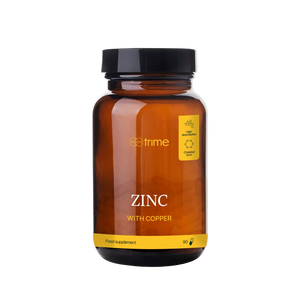
A good balance of protein and healthy fats in your diet, on the other hand, supports testosterone production. Zinc contributes to the maintenance of normal testosterone levels in the blood and to normal fertility and reproduction. Studies have also looked at the role of vitamin D [3] and boron [6] in male hormonal balance. Read more in the article Zinc and men's health: why it is important and what it affects.
Boron has been identified as another element that may influence the level of free testosterone. In the blood, most testosterone (roughly 97%) is bound to proteins (albumin or SHBG), and only a small part circulates as a free hormone. Yet free testosterone is the most biologically active form, ready to be used by the organs. [6]
Herbs That Support Optimal Testosterone Levels
Some plant substances may influence hormonal balance through their composition or effects and support the natural processes linked to testosterone production. Commonly used herbs include puncture vine (Tribulus terrestris), which contains bioactive compounds, especially steroidal saponins. These may support sexual vitality, libido and overall male performance. Although Tribulus is traditionally associated with higher testosterone, current evidence suggests that its main effect lies in supporting sexual function and vitality rather than directly and significantly raising testosterone levels in healthy men.
Another interesting plant is stinging nettle (Urtica dioica), especially its root, which contains substances that can influence the metabolism of sex hormones. Some mechanisms suggest it may affect how dihydrotestosterone (DHT) binds to its receptors and thus support hormonal balance in the prostate. That is why nettle root extract is traditionally used to support men with an enlarged prostate. However, its effect on increasing free testosterone in men has not been clearly confirmed, and it cannot be considered a direct "testosterone booster".
Key Takeaways
Testosterone is a key hormone for men's health: it influences muscle mass, energy, libido, reproductive ability, bone density and overall vitality.
Testosterone levels naturally decline with age: after 30, production falls by roughly 1–2% per year, which can affect both physical and mental condition.
Lifestyle has a major impact on testosterone: lack of exercise, chronic stress, excess weight, a poor diet and lack of sleep can all contribute to its decline.
Regular strength training supports its production: intense strength exercises and compound movements that engage large muscle groups have the greatest effect.
Quality sleep and stress management are essential: most testosterone is produced during deep sleep, and chronically elevated cortisol can limit its production.
Nutrition affects hormonal balance: enough good-quality fats and protein matter, and zinc contributes to the maintenance of normal testosterone levels in the blood.
Some herbs can offer support: puncture vine and stinging nettle, for example, are traditionally used to support male vitality and hormonal balance.
Natural support is usually the most effective route: combining exercise, quality sleep, a balanced diet and less stress is the foundation of healthy long-term testosterone levels.
Sources:
[1] Leproult R, Van Cauter E. Effect of 1 Week of Sleep Restriction on Testosterone Levels in Young Healthy Men. JAMA. 2011;305(21):2173–2174. doi:10.1001/jama.2011.710. https://jamanetwork.com/journals/jama/fullarticle/1029127
[2] Wittert G. The relationship between sleep disorders and testosterone in men. Asian Journal of Andrology. 2014;16(2):262–265. doi:10.4103/1008-682X.122586. https://journals.lww.com/ajandrology/fulltext/2014/16020/the_relationship_between_sleep_disorders_and.14.aspx
[3] Pilz S, Frisch S, Koertke H, et al. Effect of vitamin D supplementation on testosterone levels in men. Hormone and Metabolic Research. 2011;43(3):223–225. doi:10.1055/s-0030-1269854. https://www.thieme-connect.com/products/ejournals/abstract/10.1055/s-0030-1269854
[4] Prasad AS, Mantzoros CS, Beck FWJ, et al. Zinc status and serum testosterone levels of healthy adults. Nutrition. 1996;12(5):344–348. doi:10.1016/S0899-9007(96)00076-3. https://www.sciencedirect.com/science/article/abs/pii/S089990079680058X?via%3Dihub
[5] Corona G, Rastrelli G, Monami M, et al. Body weight loss reverts obesity-associated hypogonadotropic hypogonadism: a systematic review and meta-analysis. European Journal of Endocrinology. 2013;168(6):829–843. doi:10.1530/EJE-12-0955. https://doi.org/10.1530/EJE-12-0955
[6] Naghii MR, Mofid M, Asgari AR, et al. Comparative effects of daily and weekly boron supplementation on plasma steroid hormones and proinflammatory cytokines. Journal of Trace Elements in Medicine and Biology. 2011;25(1):54–58. doi:10.1016/j.jtemb.2010.10.001. https://www.sciencedirect.com/science/article/abs/pii/S0946672X10001148?via%3Dihub


