
Iodine deficiency - a serious health problem on the rise
Articles

Iodine is a trace element the body needs to produce thyroid hormones. Iodine deficiency is one of the most widespread nutritional deficiencies in the world. In 2004 it was estimated that of the 2 billion people worldwide at risk of iodine deficiency, roughly 20% were in Europe. Mild deficiency usually does not hurt and goes unnoticed for a long time, yet it can affect thyroid function, energy levels and brain development in children. In this article you will learn what iodine is, how to recognise its deficiency, how much we need per day and which foods provide it.
Article at a glance
- What iodine is and why the body needs it
- Iodine deficiency and its symptoms
- Risk groups: pregnant and breastfeeding women and children
- How much iodine we need per day
- Dietary sources of iodine
- How to supplement iodine
- Iodine and selenium: why they work together
- Excess iodine
- Substances that block iodine absorption or use
- Other uses of iodine
- Key takeaways
What iodine is and why the body needs it
Iodine is an important biogenic element that is essential for the proper development of the body. Its name comes from the Greek word “iodes”, meaning violet, because it forms dark violet plate-like crystals. The body cannot produce iodine or store it in larger amounts, so we need to take it in regularly from food. About 70% of the body's iodine is in the thyroid gland, which uses it to produce the hormones thyroxine (T4) and triiodothyronine (T3).
These hormones regulate metabolism and body temperature and take part in the development of the nervous system and brain. According to the authorised EU health claims, iodine:
- contributes to the normal production of thyroid hormones and normal thyroid function,
- contributes to normal cognitive function,
- contributes to the normal functioning of the nervous system,
- contributes to normal energy-yielding metabolism,
- contributes to the maintenance of normal skin.
An adequate iodine intake matters most in pregnancy and in the first years of life, when the child's brain develops.
Iodine deficiency and its symptoms
Iodine deficiency is a serious worldwide problem. One cause is the low concentration of the element in soil, which varies considerably between regions. As a gas from the sea, iodine reaches land where it is deposited, so coastal areas have higher iodine levels than inland and mountain regions.
Iodine deficiency develops slowly and its symptoms are inconspicuous at first. They are mainly linked to reduced thyroid function (hypothyroidism). Typical symptoms include:
- fatigue and reduced energy,
- enlargement of the thyroid gland (goitre),
- sensitivity to cold,
- constipation,
- dry skin and hair loss,
- weight gain,
- impaired concentration and memory,
- an irregular menstrual cycle in women.
Long-term and severe deficiency in pregnancy risks irreversible damage to the child's brain development. Studies link low iodine intake in childhood with a lower IQ, on average by up to 13.5 points. [1][2]
How to detect iodine deficiency
A reliable “home test for iodine deficiency” does not exist. The popular test of applying iodine to the skin and watching how quickly it fades is not conclusive. Iodine levels are best assessed by a doctor from urine, or thyroid function from blood.
Risk groups: pregnant and breastfeeding women and children
The most at-risk group is pregnant and breastfeeding women and young children up to three years. In pregnancy the need for iodine roughly doubles, because iodine is needed by the mother and the developing child.
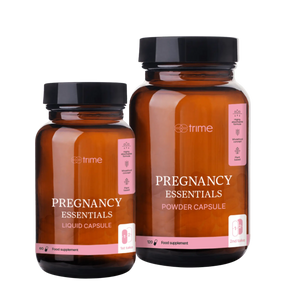
It is during this period that an adequate iodine supply matters most for the development of the child's brain and nervous system. Iodine is therefore one of the key nutrients that good prenatal vitamins take into account. Pregnant and breastfeeding women should therefore ensure an adequate iodine intake.
How much iodine we need per day
The recommended daily iodine intake differs by age and life stage:
- adults: approximately 150 µg per day,
- pregnant and breastfeeding women: approximately 250 µg per day,
- children: lower values according to age.
EFSA set the tolerable upper intake level for adults at 600 µg per day. [6] For most people, iodine intake from food and common supplements stays safely below this limit.

Dietary sources of iodine
The richest natural source of iodine is seafood. The iodine content of foods is highly variable and depends on the iodine content of soil and seawater.
Another important source of iodine is iodised salt, though the trend of reducing salt intake may lower iodine intake. Cattle feed is also fortified with iodine, so eating dairy products is another way to raise iodine intake.
A Czech natural source of iodine is the mineral water Vincentka from Luhačovice. 100 ml contains approximately 659 µg of iodine, which is several times the recommended daily dose for an adult. [7] It is a medicinal mineral water with high mineralisation, so it is consumed in small amounts and not over the long term.
| Food | Approximate iodine content |
|---|---|
| Seaweed (kombu, nori) | very high, up to thousands of µg / 100 g |
| Mineral water Vincentka | approximately 659 µg / 100 ml [7] |
| Sea fish (cod) | approximately 100 to 200 µg / 100 g |
| Seafood | tens of µg / 100 g |
| Iodised salt | approximately 20 to 30 µg / g of salt |
| Milk and dairy products | approximately 10 to 30 µg / 100 g |
| Eggs | approximately 20 µg / 100 g |
The values in the table are approximate. In seaweed the iodine content can be extremely high and variable, so it is advisable to consume it in moderation.
How to supplement iodine
The basis is a varied diet with sea fish, iodised salt and dairy products. Where diet is not enough, you can reach for an iodine food supplement. In our multivitamin Daily F20 Complex, iodine comes from the organic seaweed Ascophyllum nodosum, grown in a sustainable way.

Iodine and selenium: why they work together
Iodine alone is not enough for proper thyroid function. Selenium is also important, as it is part of the enzymes that convert the hormone T4 into the more active T3. Selenium also contributes to normal thyroid function and to the protection of cells from oxidative stress. Iodine and selenium thus act together in the thyroid, which is why they are often supplemented together.
Excess iodine
Iodine is harmful both in deficiency and in excess. A long-term high intake can disrupt thyroid function. Symptoms of acute excess include a metallic taste in the mouth, vomiting, diarrhoea and headache. Caution is warranted in people with thyroid disease and with iodine allergy. Iodine allergy most often shows as a skin reaction after contact with iodine-containing disinfectant. The European Food Safety Authority (EFSA) set the tolerable upper intake level (UL) for adults at 600 µg of iodine per day.
Substances that block iodine absorption or use
Some substances can reduce the absorption or use of iodine. They include:
- Goitrogens (strumigens) in raw cruciferous vegetables (broccoli, cauliflower, cabbage). Their effect is significant only with very high consumption of raw vegetables, and cooking largely inactivates them. Cruciferous vegetables, which also have many health benefits, are on the contrary rather lacking in many people's diets.
- Perchlorates, environmental pollutants that can block the entry of iodine into the thyroid. [4] These substances belong among the so-called endocrine disruptors, which enter the food chain through contaminated soil and water.
Other uses of iodine
Besides its use in treating thyroid disorders (assuming iodine is their cause), iodine has other effects.
Disinfection and antiseptic. Iodine has been used as a skin antiseptic since 1839, that is for more than 170 years. It is still used to treat minor injuries. [8]
Broad-spectrum antimicrobial action. Iodine acts against Gram-positive and Gram-negative bacteria, fungi, protozoa and viruses. Unlike many antibiotics, no acquired resistance to it has been described, probably because it targets microorganisms at several sites at once. [8][9]
Thyroid protection during a radiation accident. Giving potassium iodide saturates the thyroid with iodine and so prevents the uptake of radioactive iodine. This principle is used in nuclear accidents, for example in connection with the Chernobyl power plant explosion. [10][11]
Research in breast health. Iodine is also studied in connection with cyclic breast tenderness and fibrocystic changes of breast tissue. Smaller studies observed a reduction in cyclic breast pain after iodine administration. [12][13]
Key takeaways
Iodine is a trace element the body cannot produce. It contributes to the normal production of thyroid hormones and normal thyroid function, cognitive function and energy-yielding metabolism.
Symptoms of iodine deficiency include fatigue, sensitivity to cold, constipation, dry skin, weight gain and an enlarged thyroid.
The most at-risk group is pregnant and breastfeeding women and young children, because iodine is key for the child's brain development.
Adults need approximately 150 µg of iodine per day, pregnant and breastfeeding women approximately 250 µg. The upper limit for adults is 600 µg per day.
The richest sources are sea fish, seafood and seaweed. Other sources include iodised salt, the mineral water Vincentka and dairy products.
Alongside iodine, selenium is also important for the thyroid, as it helps convert the hormone T4 into the more active T3.
Sources:
[1] Bleichrodt N, Born MP. A metaanalysis of research on iodine and its relationship to cognitive development. In: The Damaged Brain of Iodine Deficiency. 1994.
[2] Bougma K, Aboud FE, Harding KB, Marquis GS. Iodine and mental development of children 5 years old and under: a systematic review and meta-analysis. Nutrients. 2013;5(4):1384-1416. doi:10.3390/nu5041384
[3] Bailey RL, West KP Jr, Black RE. The epidemiology of global micronutrient deficiencies. Ann Nutr Metab. 2015;66(Suppl 2):22-33. doi:10.1159/000371618
[4] Leung AM, Pearce EN, Braverman LE. Perchlorate, iodine and the thyroid. Best Pract Res Clin Endocrinol Metab. 2010;24(1):133-141. doi:10.1016/j.beem.2009.08.009
[5] WHO. Iodine deficiency in Europe: a continuing public health problem. World Health Organization, 2007.
[6] EFSA Panel on Dietetic Products, Nutrition and Allergies. Tolerable upper intake level of iodine. EFSA Journal.
[7] Czech National Institute of Public Health (SZÚ). How to ensure adequate iodine intake. (SZÚ educational material)
[8] Durani P, Leaper D. Povidone-iodine: use in hand disinfection, skin preparation and antiseptic irrigation. Int Wound J. 2008;5(3):376-387. doi:10.1111/j.1742-481X.2007.00405.x. PMID: 18593388
[9] Bigliardi PL, Alsagoff SAL, El-Kafrawi HY, et al. Povidone iodine in wound healing: a review of current concepts and practices. Int J Surg. 2017;44:260-268. doi:10.1016/j.ijsu.2017.06.073
[10] WHO. Use of potassium iodide for thyroid protection during nuclear or radiological emergencies. World Health Organization.
[11] U.S. Food and Drug Administration. Potassium Iodide as a Thyroid Blocking Agent in Radiation Emergencies. FDA, 2001.
[12] Kessler JH. The effect of supraphysiologic levels of iodine on patients with cyclic mastalgia. Breast J. 2004;10(4):328-336. PMID: 15239792
[13] Ghent WR, Eskin BA, Low DA, Hill LP. Iodine replacement in fibrocystic disease of the breast. Can J Surg. 1993;36(5):453-460. PMID: 8221402


